Reliance Industries Limited on Wednesday became the first Indian company to hit the Rs 19 lakh crore market valuation mark following a rally in its share price. The market heavyweight stock jumped 1.85 per cent to its record high of Rs 2,827.10 on the BSE. Following the gain in the share price, the company's market valuation jumped to Rs 19,12,814 crore in morning trade on the BSE.
Consolidated revenue rose to a record Rs 163,854 crore.

Global energy supermajor BP plc on Thursday said it is about to open its first 'Jio-bp' branded petrol pump in partnership with Reliance Industries near Mumbai.

Retail investors usually get caught up in the frenzy of a bull market and burn their fingers in IPOs, warns Tinesh Bhasin.
Reliance Industries shareholders will have to pay only 25 per cent for subscribing to the company's mega Rs 53,125-crore rights issue, and the balance will have to be paid in two instalments in May and November next year, the company said.

In the rights issue, the company is offering one share for every 15 shares held at Rs 1,257. The rights shares are expected to be listed on the BSE and NSE on or around June 12.

Since the Centre tightened the Press Note 3 norms in April last, as many as 150 private equity/venture capital investment applications from China and Hong Kong are pending with the government, starving the country's start-up ecosystem of funds, says a report. The Press Note 3 (PN3) changes were effected in April, restricting foreign direct investment from countries that share land borders with India. Analysts are of the view that the move was primarily aimed at China as lot of private funds were investing billions into domestic companies.

Reliance Industries will sell 20 per cent stake in its oil and chemicals business to Saudi oil giant Aramco for about $ 15 billion and nearly half of its fuel retail business to BP of UK for Rs 7,000 crore. Aramco, the world's biggest crude exporter, will also supply Reliance's twin-refineries at Jamnagar in Gujarat with 7,00,000 barrels of oil a day on a long-term basis, Ambani said.

M&S operates in a joint venture with Reliance Retail.

Recent easing of restrictions does not address the pain in the sector.

The price of diesel sold to bulk users has been hiked by about Rs 25 per litre in line with a near 40 per cent rise in international oil prices, but retail rates at petrol pumps remain unchanged, sources said. Petrol pump sales have jumped by a fifth this month after bulk users like bus fleet operators and malls queued up at petrol bunks to buy fuel rather than the usual practice of ordering directly from oil companies, widening the losses of retailers. Worst hit are private retailers like Nayara Energy, Jio-bp and Shell, who have so far refused to curtail any volume despite a surge in sales.

The strong correlation between its sales (revenue or turnover) and crude oil prices (average for the financial year) suggests that Ambani may be proved right.

US retail major is in talks with Flipkart, Snapdeal, ShopClues and Grofers for partnership.

Jio Platforms is expected to use its 388 million mobile phone subscribers as the cornerstone of an e-commerce and digital services business to rival Amazon and Walmart's Flipkart.
The windfall tax on oil produced within India and fuel exported overseas will make up for more than three-fourths of the revenue that the government lost when it cut excise duty on petrol and diesel to cool soaring inflation, industry sources said. India on July 1 joined a select league of nations globally that have taxed windfall gains accruing to oil companies from soaring energy prices. The government slapped a Rs 6 per litre tax on the export of petrol and jet fuel (ATF) and Rs 13 a litre on the export of diesel effective July 1. Additionally, a Rs 23,250 per tonne tax was levied on crude oil produced domestically.

The store segmentation approach that Shoppers Stop is taking is intended to improve its hit rate at a time when local and international fashion retailers are crowding the market with new merchandise across price points.
The COVID-19 pandemic and the ensuing lockdown may have put the best of funds on a backfoot of deal activity, RIL, however, has been an outlier. With 10 different investors brought in for its telecom venture Jio Platforms, RIL undertook 12 different transactions since April this year.


According to the plan made by the lenders and RIL, all Future group listed companies will be merged into Future Enterprises. RIL will then invest Rs 8,500 crore in the merged entity which will include the retail business.

The threat may be a decade away, but it has brick-and-mortar sellers rethinking their strategies and banking on the govt to regulate online companies.

A platform that helps retailers reduce failed transactions while keeping the cost down, Innoviti is all set for India's digital payments revolution.

The company would venture into khadi products and animal feed this year, Ramdev said.

Besides growing tech and digital enhancements, the firms are ramping up the hiring of more delivery partners and reinforcing existing Covid protocols.

Govt's move will facilitate entry of global giants such as Total SA of France, Saudi Arabia's Aramco, BP Plc of the UK, and Trafigura's downstream arm Puma Energy.

Jio-BP, the fuels and mobility joint venture between Reliance Industries and UK's BP, on Thursday announced a partnership with BluSmart - India's first and largest all-electric ride-hailing platform - to set up a network of commercial large-scale EV charging stations. As part of the partnership, Jio-BP will set up these stations for passenger electric vehicles and fleets across the country, the company said in a statement. "Through this partnership, both companies will collaborate in planning, development and operation of EV charging infrastructure, at suitable locations across cities where BluSmart operates," it said.

Billionaire Gautam Adani's group has created a new company for its foray into healthcare services through the acquisition of large hospitals, diagnostic chains, and offline and digital pharmacies. Adani Enterprises Ltd - the group's business incubator firm - in a regulatory filing said a wholly-owned subsidiary, Adani Health Ventures Ltd (AHVL) was incorporated on May 17, 2022. AVHL will "carry on the business of healthcare-related activities including, inter alia, setting up, running, administrating medical and diagnostic facilities, health aids, health tech-based facilities, research centers and to do all other allied and incidental activities in this regard," it said.

That's because India does not have a serious venture capital industry with an appetite for risk, observes T N Ninan.

Union Minister of Commerce and Textiles Piyush Goyal has stirred up a hornet's nest by taking on India Inc, specifically the Tata group, which is among the companies that lobbied against the Modi government's pro-consumer draft e-commerce policies. While Goyal's comments, made at a Confederation of Indian Industry (CII) event, were streamed live on YouTube, the industry lobbying body later edited the video and subsequently withdrew the entire speech. Goyal had said the Tata group and other Indian companies often lobbied for their interest, while ignoring national interest.
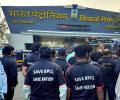
Privatisation of BPCL, which was dubbed India's biggest ever, has been stalled with just one bidder left in the fray after two others walked out over issues such as lack of clarity in fuel pricing, a top source said. The government had planned to sell its entire 52.98 per cent stake in Bharat Petroleum Corporation Ltd (BPCL) and invited Expression of Interest from bidders in March 2020. At least three bids came in by November 2020 but only one remains now after the others withdrew from the race.

Three business houses are likely to be in the final race to strike a deal with Germany's Metro AG for investing in its India unit -- Metro Cash & Carry. Industry sources in the know named Reliance, Adani Group, and Thailand's conglomerate Charoen Pokphand (CP) as potential frontrunners to acquire a partial or full stake in the Gurugram-headquartered Metro Cash & Carry, which has 31 stores and 5,000 direct employees. Around 20 companies, including strategic and private equity investors, were approached by the German chain, inviting them to bid for the Indian wholesale business, according to a source aware of the M&A developments.

Online play is a priority now -- so far unthinkable in a business that's all about a meaningful interface with kirana stores.

Unlike many other B-schools, IIM Ahmedabad follows a cluster system of final placements process where sectors are invited in cohorts at regular intervals.

Bulk of the medicine sales in the $22-24 billion domestic pharma market happens through offline retail chemists. With the entry of online pharmacies, this space has started to witness a shake-up. Sample this: Dawaa Dost, a Rajasthan based digital health start-up, generates medicine orders from 'kirana' stores and women self-help groups (SHGs) that operate in villages, and then service these orders through its affiliated network of pharmacies. Biddano, another health-tech start-up, has a platform that acts as an aggregator for neighbourhood chemist shops.
The deal, as well as some other strategic and financial investments in works, will help Ambani cut debt at RIL.

Hailing Prime Minister Narendra Modi and the Bharatiya Janata Party government, top industry captains pledged mega investments at the Vibrant Gujarat Global Summit

Ambani's $15 bn bet will upend Indian telecom
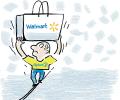
Although Walmart-Flipkart wholesale game-plan is to target about a $150 billion market out of a total pie of $700 billion in the country, the consolidation marks the end of the multi-brand dream of the American retail giant.

Together, the top 10 business groups reported a pre-tax loss of Rs 19,342 crore during the January-March 2020 quarter, as against a profit before tax of around Rs 48,500 crore in the year-ago period and Rs 39,600 crore during the December quarter. While Vedanta was the worst hit. others included Aditya Birla, Bharti, Adani, Mahindra, and Tata.

Why does the world's fastest-growing major consumer of energy fail to attract investments in oil and gas? This is a question worth pondering after private sector conglomerate Reliance Industries Ltd (RIL) failed to close a $15-billion downstream asset deal with Saudi Arabia's national oil company, Aramco. It's understandable if multi-billion dollar investments in oil and gas projects or deals involving state companies that need to traverse a complex bureaucracy at state and federal levels and the corridors of ministries unravel. However, Mukesh Ambani-run RIL, India's most successful energy company, is not typically known to fumble on closing deals (Ambani closed deals worth around Rs 2 trillion early last year in telecom and retail with blue chip investors).

Due to default in payment, the securities of FICL and NDIL will be valued at zero basis AMFI standard hair cut matrix, and interest accrued and due will be fully provided.
